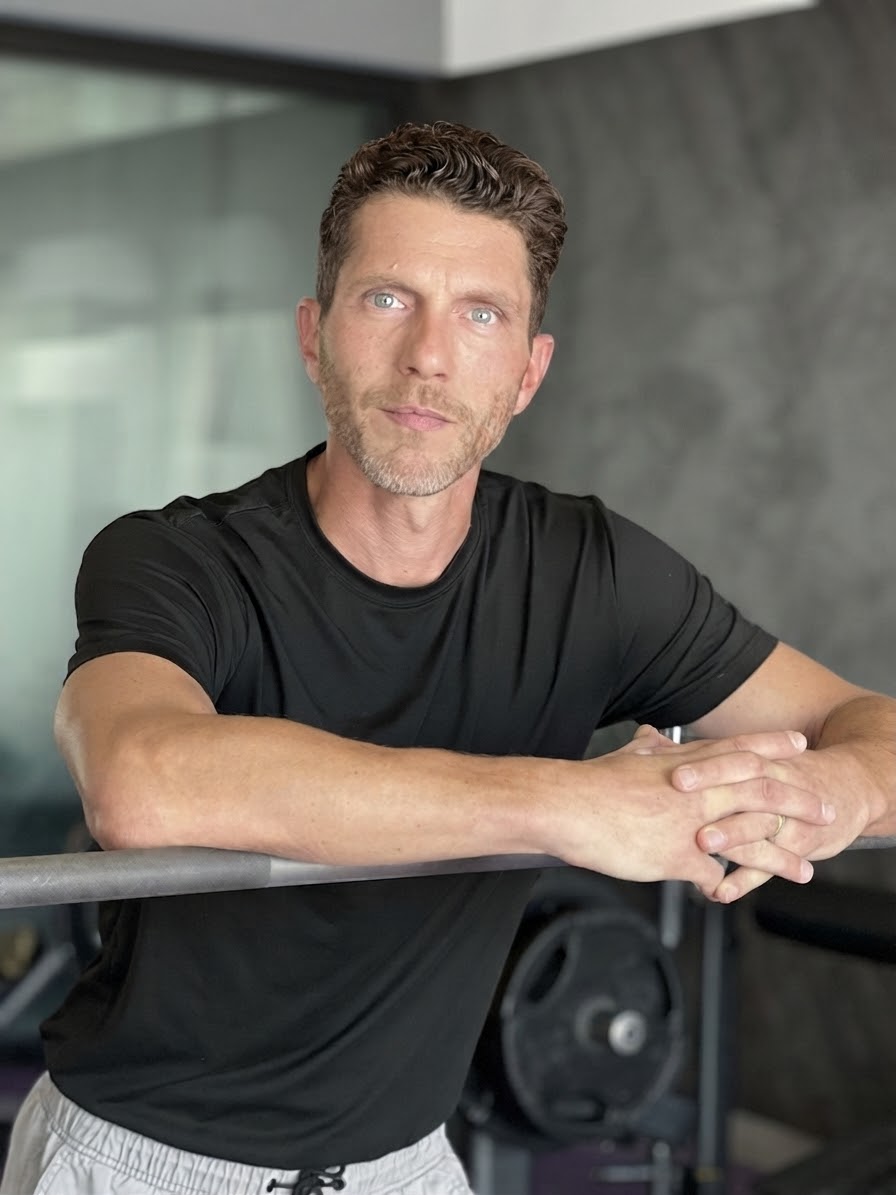
One thing stopped doing its job, and everything else has been quietly covering for it ever since. That's why it hurts where it hurts. Ninety minutes and I'll tell you which thing.
Video or in person. Written report in your inbox inside 48 hours.
If you read those and thought that's uncomfortably accurate — that's the whole client list. It's a pattern, not a personality flaw, and it's more fixable than you've been led to believe.
Most people have never had anyone actually look at how they move. They've had someone look at where it hurts, which is almost never the same place. This is a screen, not a workout and not a diagnosis — I'm not treating anything, I'm finding the one link in the chain that stopped holding up its end.
Twelve minutes on your history and, more importantly, the specific thing you used to do and can't now. Everything after this hangs off that answer.
Eighteen movements, in a deliberate order — unloaded first, loaded last. I find out what you own before I ask you to carry anything.
Twenty minutes where I teach you the one thing that matters most. You leave able to do it without me. Most people feel a change inside the session.
In your inbox inside 48 hours. What I found, the scoring grid you watched me fill in, your prescribed program, and a ten-day plan. This is the product.
Ten questions, what you ate yesterday, and what equipment you actually have in the room where you'll really train. Eight minutes. It arrives when you book so we don't spend our ninety minutes on paperwork.
A phone propped against a wall is enough. Wear something you can move in, bare feet or flat shoes. That's the whole preparation.
Written, specific to you, in plain language. No jargon, no template with your name pasted in. It names the one thing driving most of what I saw, and gives you exactly what to do about it for ten days.
We go through what changed. Then I tell you straight whether that's a ten-day fix or a longer rebuild. Sometimes it's genuinely done and I say so. That call is included.


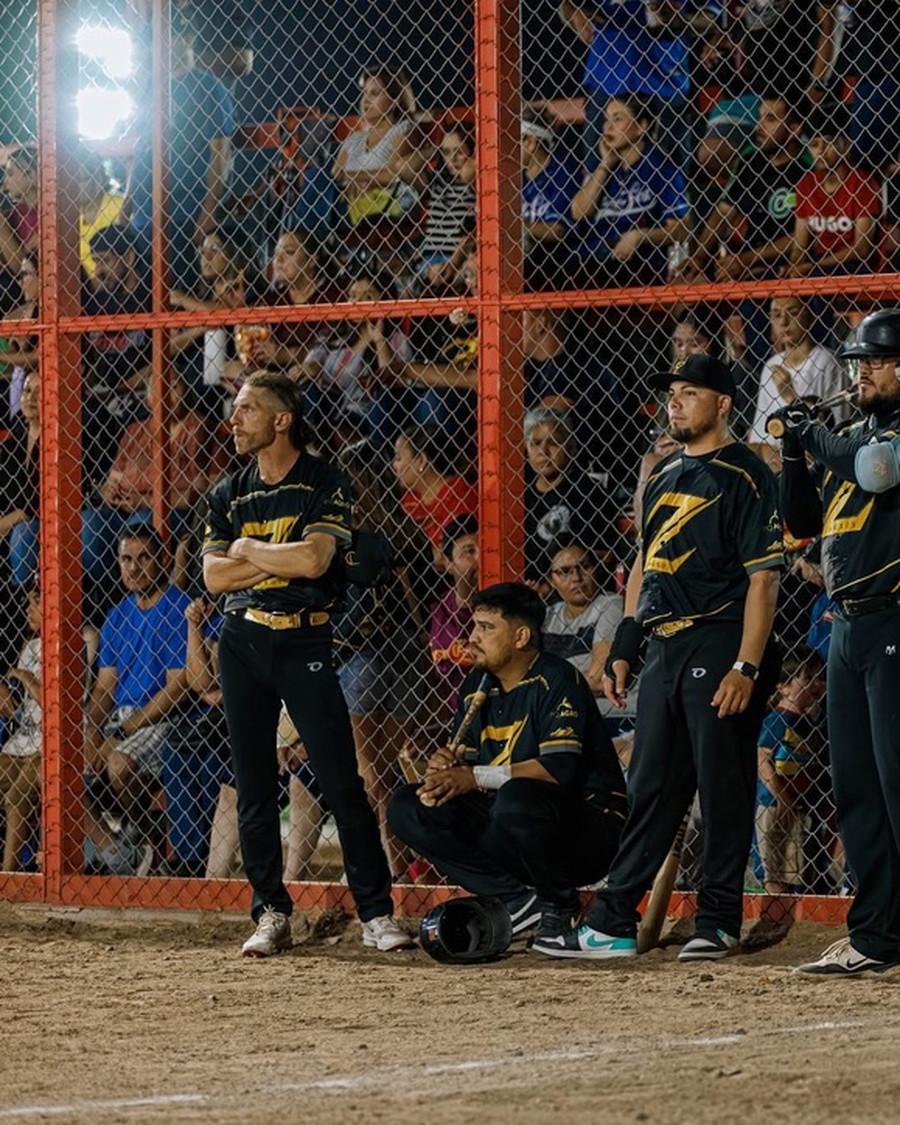
Liga del Sol, Hermosillo. Still playing.
I played baseball my entire life, competitively, until I turned down smaller schools to try to walk on at Central Florida. That's where it ended. Leukemia at eighteen, three years of treatment, and then the chemo came back for my knees in my mid-twenties. I was referred to a surgeon at the University of Miami doing an experimental procedure. It worked. I could walk. He told me not to count on running again.
I rebuilt anyway. I was a client at a gym in downtown LA at twenty-five, and within two years I was stronger than I'd ever been before I got sick. I was also icing my knees for two days after every heavy session and deciding that was just the price.
"I would quietly pretend that was progress."
Then I burned out my hips compensating for knees I'd never dealt with, hiking to Everest Base Camp trying to prove something.
Five years ago a mentor in a course on myofascial chains watched me walk for about a minute and read it off my gait. The asymmetry, the compensation, all of it. Then she told me to start with my feet. Not my knees. My feet. I'd been a trainer for fifteen years and nobody had ever done that for me.
What I do now is narrow on purpose. I work with people over forty who used to be athletic and stopped, not with beginners, not with bodybuilders, and not with people who want to be shouted at.
I've been coaching close to twenty years. I started by accident, at six-thirty on a Monday morning in Los Angeles. I was the client. My trainer walked off the floor and I took the session. Several hundred people since: a professional baseball player, a college golfer, an actress, a lot of executives, and the security guards in the same building. I coach in English and Spanish.
Almost nobody over forty has actually been assessed. They've been sold programs and given exercises, but nobody has watched them move and told them what's going on. That gap is the entire reason this exists.
"When someone tells me their knee is shot, I tell them mine was supposed to be too."
It's probably just overworked. We rebuild it slowly. You'd be surprised. At forty I put a uniform back on and played a season here in a men's league.
"I was in better shape than the twenty-somethings on that team. I couldn't get through the dynamic warm-up."
I can sprint now. I've stolen second base. Fifteen years earlier I hit a ground ball in a pickup game, broke out of the box to run to first, and fell flat on my face in front of everyone I went to college with.
I live in Hermosillo, Mexico with my wife and our five-year-old, and I'm building a studio here. I turn forty-two this September, which is roughly when I stopped being able to pretend this was theoretical.
Your training and your food, rebuilt for you every month. Not a template with your name on it — a program written off your screen, with the meal plan, the shopping list and the recipes that go with it. Macros and food logged in the same place your sets are.
A form review by video every week, on whatever you send me. A live group session every week — questions, technique, and some weeks we cook. Daily check-ins, and I read them.
Yes, I use automation. It is how the check-in lands at the same time every morning. It is not how you hear from me. You are not buying a subscription that emails you once a month and calls it coaching.
No one-to-one video — the weekly group session is the live contact, and one-to-one time is what the twelve weeks is for. Open to anyone who has done the assessment. That is the only door.
Sometimes, yes — and I'll be the one to tell you so. If pain wakes you at night regardless of position, if you get numbness or weakness travelling down an arm or leg, if there's any change in bladder or bowel control, if you've had unexplained weight loss, or if it's getting steadily worse week on week — go and get it looked at properly. I'll hold your slot.
But if it's the ordinary kind of ache that's been roughly the same for two years and nobody has found anything wrong, that's precisely what this is for. Doctors are excellent at ruling things out. Almost nobody's job is teaching you to move differently, and that's the gap I work in.
Yes, and better than most people expect. I need to see you from the side and the front with enough floor space to lie down — a phone against a wall about eight feet back does it. Almost every screen is a bodyweight movement. The two or three items that genuinely need hands-on, I'll tell you I'm inferring rather than measuring, and I'll say so in the report too.
Often it's more useful for you than for someone who does nothing. People who still train have usually built a lot of strength on top of one compensation, and that's exactly the setup that produces a stubborn ache that won't go away no matter how sensibly you program. You don't need to be broken to be worth screening. You need something that isn't responding to the obvious answers.
Then I'll tell you that, and you'll have a written record saying your movement is clean — which is genuinely useful information if you've been quietly worried. It's rare. In practice almost everyone over forty has at least one clear asymmetry they had no idea about. But I'd rather hand you an honest empty page than invent a problem to sell you a solution.
Not during the session — there's no pitch at minute eighty-two, and if you feel one, call me on it. On day ten I'll tell you whether I think twelve weeks would help, because that's an honest finding and it would be strange to withhold it. Then you say yes or no and either answer is genuinely fine. Plenty of people take the report, run the ten days, and I never hear from them again except to say it worked.
Usually within the week. Pick a slot here — the intake form arrives automatically when you book, and it needs to be back before we start. If nothing on the calendar works, email me and we'll find something.
You just need someone to find out which link in the chain gave up, instead of guessing at it for another two years.
Book the assessment — $100